How to Choose a Risk Adjustment Software Vendor: Key Features to Compare
Buying software for risk adjustment used to be mostly about finding more codes. In 2026, that is too narrow. The CMS-HCC V28 model is fully phased in: for CY 2026, the Centers for Medicare & Medicaid Services (CMS) calculates 100% of Medicare Advantage risk scores using the updated 2024 CMS-HCC model. Audit enforcement is moving too: on May 29, 2026, CMS notified selected contracts for Payment Year 2021 Medicare Advantage Risk Adjustment Data Validation (MA RADV) audits.
Together, these changes mean the platform you choose has to prove that each captured diagnosis is defensible, not just detectable. This guide offers a practical checklist for health plan and provider executives who need to build a shortlist and an evaluation rubric that can hold up under scrutiny.
Key takeaways
- Treat evidence-linked diagnosis support and code deletion as core requirements, not optional demo features.
- Test retrospective, prospective, and RADV workflows with the same charts across every finalist.
- Validate V28 mappings, EHR integration, export files, security controls, governance, and services separately.
- Require measurable pilot outcomes before relying on accuracy, ROI, or implementation-speed claims.
Table of contents
- Risk adjustment in one minute
- What AI in healthcare risk adjustment means now
- The feature checklist
- What changed with CMS in 2026
- How to run a fair vendor comparison
- Comparing platform archetypes
- RFP questions that surface reality
- Implementation playbook
- Governance and compliance
- Red flags and pitfalls
- Frequently asked questions
Risk adjustment in one minute
Risk adjustment estimates how much care a member is likely to need. Diagnoses map to Hierarchical Condition Categories, or HCCs, which feed a member's Risk Adjustment Factor, or RAF. Higher expected need generally means higher expected payment. Because payment follows documented conditions, documentation quality is central.
Recognized documentation standards help determine whether a diagnosis is supportable. AAFP guidance describes MEAT: the record should show that a diagnosis was Monitored, Evaluated, Assessed or Addressed, or Treated. AHIMA guidance discusses MEAT and TAMPER criteria for risk adjustment documentation. A code without supporting documentation is what the CMS MA RADV program is designed to identify; CMS may collect overpayments when submitted diagnoses are not supported by medical records.
What AI in healthcare risk adjustment means now
Early tools leaned heavily on natural language processing to find candidate diagnoses. That is now a baseline capability. The more useful question is whether the tool can explain itself. Buyers should expect evidence-linked outputs, clear human review, and the ability to both add and delete codes with a transparent justification for each action.
A simple evaluation test is to ask any vendor to show the exact source excerpt behind three suggested diagnoses. If the answer is only a confidence score with no traceable note, slow down. The goal is not a black box that produces more codes. It is a system your coders and auditors can defend line by line.
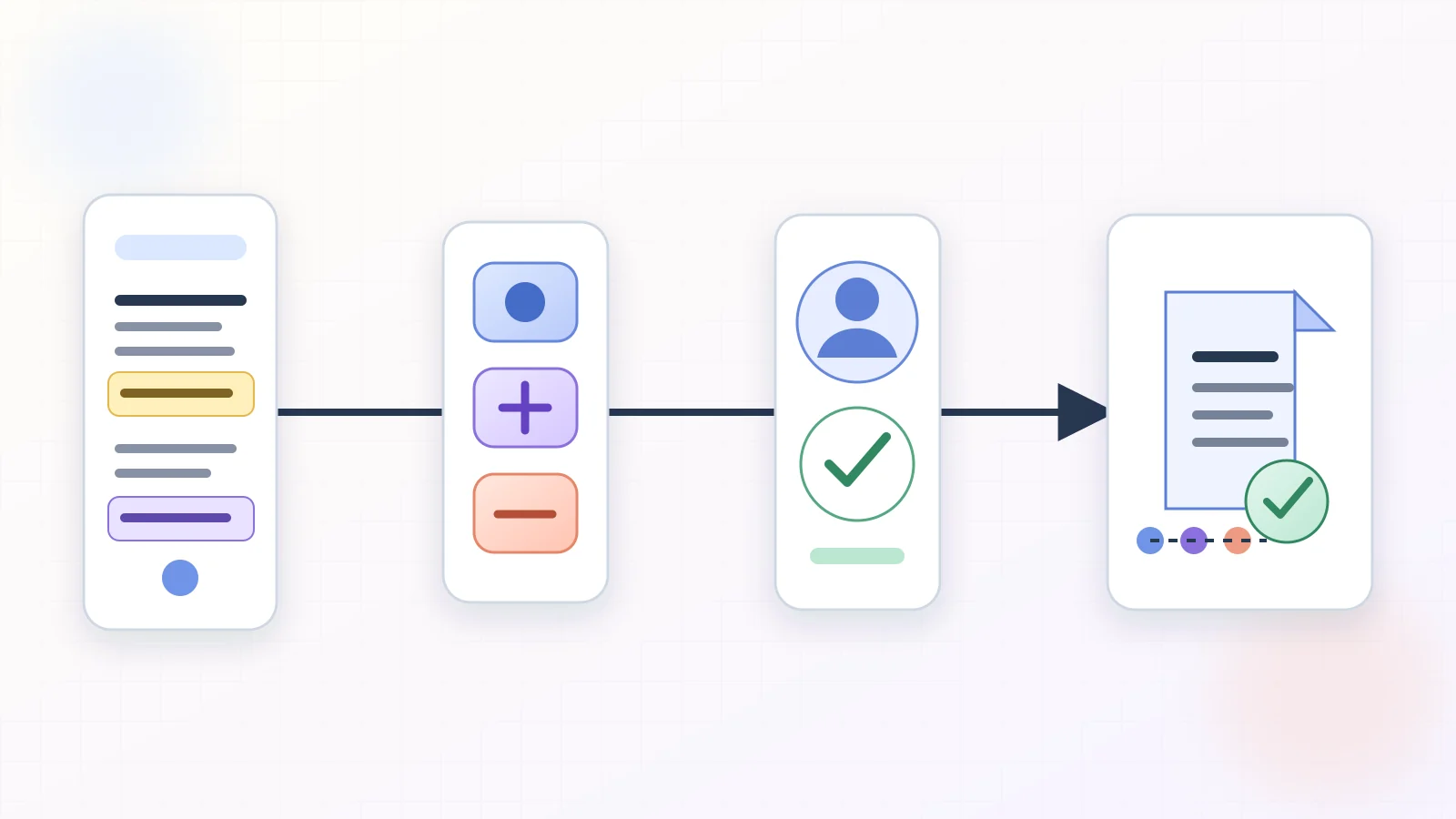
A defensible workflow connects each suggestion to source evidence, a review decision, and an exportable audit record.
The feature checklist
Use this list to structure demos and RFPs. When shortlisting vendors, prioritize those that cover retrospective, prospective, and RADV workflows with evidence-linked HCC outputs. For example, a risk adjustment platform that pairs AI suggestions with audit-ready MEAT documentation can reduce exposure to unsupported codes rather than simply increasing capture. Confirm every capability in your own data and contract.
- Evidence-linked suggestions: MEAT-backed excerpts with citations to the source note.
- Workflow coverage: Prospective support, including pre-visit summaries, point-of-care alerts, and post-visit checks, plus retrospective reviews and RADV audit modules.
- V28 readiness: Updated mappings, condition hierarchy changes, and awareness of normalization effects.
- EHR integration: Alerts inside the EHR, FHIR and HL7 interoperability, and reasonable latency on pre-visit summaries.
- Data ingestion: Structured and unstructured inputs such as notes, labs, and pharmacy data.
- Audit tooling: Export files, chain-of-custody records, response templates, and status dashboards.
- AI governance: Explainability, drift monitoring, bias checks, model versioning, and role-based permissions.
- Security posture: HIPAA-aligned handling plus independently verifiable certifications such as SOC 2 Type II and HITRUST. Apply the same scrutiny described in this AI scribe HIPAA compliance guide to PHI access, logging, retention, and business associate obligations.
- Deployment options: APIs and AI-as-a-service options versus a full platform.
- Services model: Clarity on when you need platform plus services versus platform only.
What changed with CMS in 2026
Two dated facts anchor the current landscape. In the CY 2026 Medicare Advantage and Part D Rate Announcement, CMS says it is calculating 100% of applicable Medicare Advantage risk scores using the 2024 CMS-HCC model. The same fact sheet reports a 9.04% Effective Growth Rate, a projected +5.06% expected average change in MA plan revenue, and an expected underlying coding trend that would increase risk scores by 2.10% on average.
The enforcement calendar matters just as much. CMS's RADV announcements page records the May 29, 2026 notice to contracts selected for Payment Year 2021 audits. Documentation filed today may be reviewed years later. A platform that keeps a durable evidence trail is easier to defend when that review arrives.
How to run a fair vendor comparison
Marketing decks are not evidence. A structured, apples-to-apples test can tell you more in a day than months of sales conversations.
- Use the same 25 charts across every demo so results are comparable.
- Require vendors to show both code additions and code deletions.
- Ask for an exportable evidence packet per code and a CMS-ready RADV report.
- Validate EHR alert precision on test patients, measuring false positives and time to alert.
- Score the result with a pre-agreed rubric rather than changing criteria after each presentation.
The deletion requirement is easy to overlook and revealing. A system that only suggests additions can quietly increase audit exposure. One that surfaces codes to remove, with justification, is built around defensibility, not just capture.
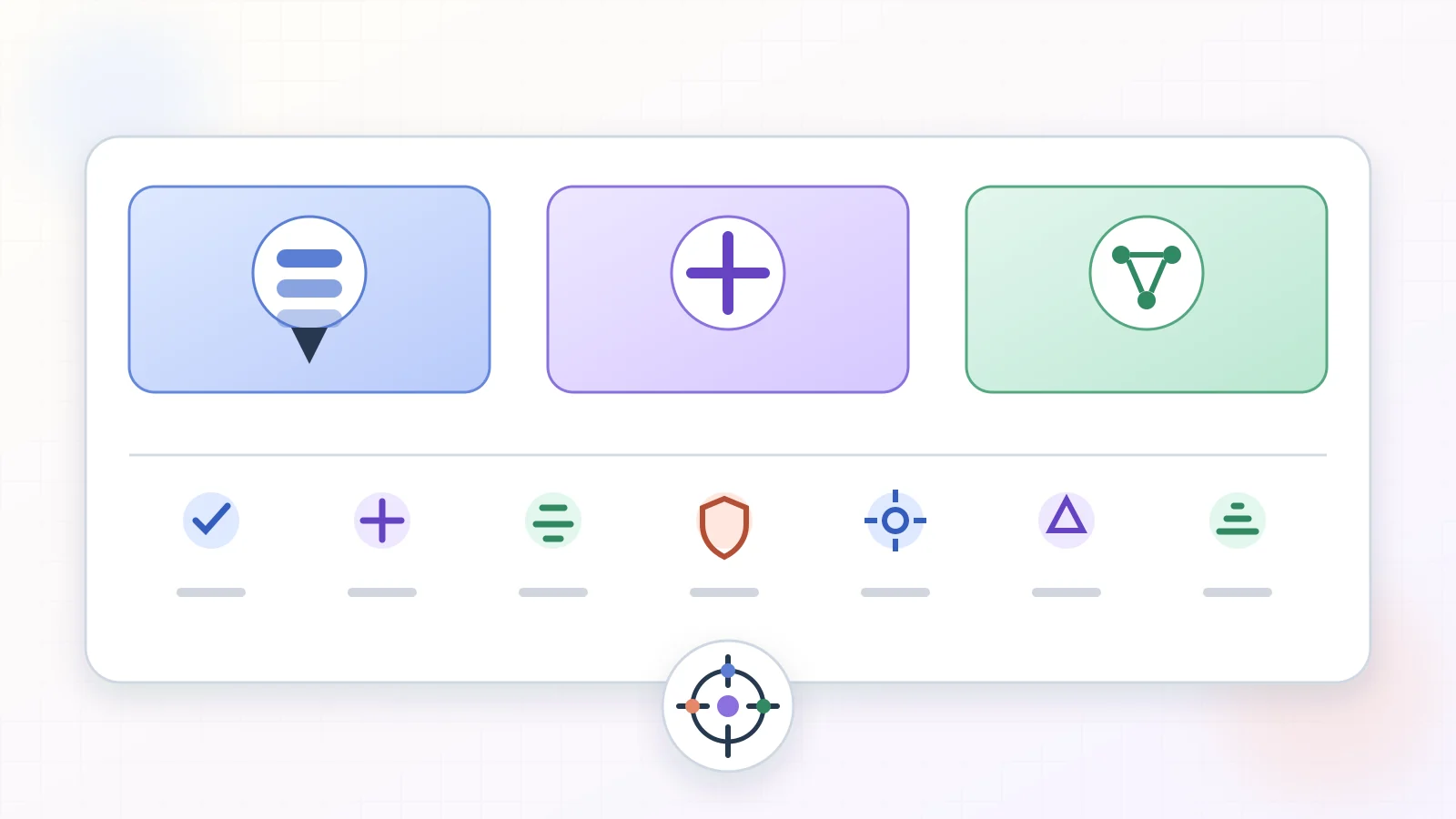
Compare different platform archetypes against the same rubric; do not let the vendor's preferred metric define the winner.
Comparing platform archetypes
Most tools fall into a few broad categories. None is universally right; the fit depends on your lines of business, current systems, and internal review capacity.
Full-stack risk platforms emphasize lifecycle coverage and RADV workflows. Edifecs says its risk adjustment offering analyzes structured and unstructured data across prospective, concurrent, and retrospective use cases. Reveleer describes an integrated platform spanning retrieval, coding, submissions, prospective risk, and CMS or RADV-IVA support. These options suit teams that want one system covering much of the cycle.
Point-of-care prospective solutions focus on accurate capture during the visit and tighter clinician workflows. They fit provider groups that want to reduce front-line friction while improving documentation before the claim is submitted.
AI-as-a-service engines deliver suggestions through APIs while you keep your existing systems. RAAPID spans both models, offering an AI-as-a-service option alongside retrospective, prospective, and RADV audit modules, with HCC output linked to MEAT evidence, according to vendor materials. Its prospective coverage is described as running from pre-visit summaries through in-workflow prompts and pre-claim checks inside the EHR. Weigh these categories against how much of your workflow you want to keep versus replace.
Treat every vendor statement as a claim to validate. Product packaging, integrations, certifications, and service boundaries can change.
RFP questions that surface reality
These questions cut through positioning. Treat accuracy, ROI, and speed as claims to demonstrate, not assurances to accept. Apply the same proof standard to every finalist.
- Show the exact evidence trail for three suggested diagnoses.
- How do you prioritize charts and members?
- What is your process for code deletions?
- How do you handle V28 condition category changes?
- What audit exports do you produce, including file types and fields?
- What SIEM integrations and PHI logging do you support?
- How are model updates validated and versioned?
- What is your clinician time-on-task at the point of care?
- What certifications do you hold, such as HITRUST or SOC 2 Type II, and can we review the supporting reports?
- Can you integrate via APIs if we keep our current workflow?
- Which implementation, coding, and audit services are included, optional, or delivered by a third party?
Implementation playbook
A realistic pilot can follow a 90-day arc: establish data connections and the EHR integration path, build coder and auditor playbooks, run quality assurance on suggestions and deletions, then go live with metrics such as chart review time, audited code acceptance rate, and false-positive rate.
Define those metrics before signing. If a vendor cannot help measure them, demo results will be hard to reproduce in production. Treat 90 days as a planning frame, not a guarantee; the actual schedule depends on data access, security review, integration scope, contracting, testing, and user readiness.

A bounded pilot should move from integration to review practice to measurable quality gates, then continue into recurring governance.
Governance and compliance
AI in this setting needs a lightweight but real model risk management loop. Put change control around model updates. Sample outputs for chart-level audits on a recurring basis. Build an exception-handling path for unsupported codes, and run RADV readiness checks monthly rather than scrambling when a notice arrives.
Because RADV can look back several years, governance records are part of your defense. A platform that supports an auditable RADV workflow with evidence trails can make that discipline easier to maintain, but the buyer remains responsible for validating the capability, configuring controls, monitoring performance, and following applicable CMS and coding requirements.
Red flags and pitfalls
A few warning signs recur across weak evaluations. Watch for them early.
- Black-box suggestions with no visible evidence behind them.
- Messaging built around finding more codes with no path for deletions.
- Alert volume that overwhelms clinicians and increases provider abrasion.
- Thin security assurances or vague answers on certifications.
- No CMS-ready exports for audit response.
- Unclear ownership of model updates, appeals, evidence retention, or third-party services.
- Accuracy or ROI claims that cannot be reproduced on your own sample.
Bringing it back to outcomes
The strongest platform is not the one promising the biggest lift. It is the one that produces defensible documentation under V28 and makes RADV responses smoother when a notice lands.
Judge each finalist on what it shows in your own demo data and what it can hand you as audit artifacts. Whether you lean toward a full-stack system, a point-of-care tool, or a unified platform such as RAAPID, insist that evidence carries the decision.
Frequently asked questions
What is the most important feature in risk adjustment software?
The most important feature is an evidence trail that links each suggested or deleted diagnosis to the relevant source documentation and records the human review decision. Detection without traceable support is difficult to defend in a RADV audit.
Why should risk adjustment software support code deletions?
An add-only system can preserve unsupported diagnoses and increase audit exposure. A two-way review should identify both missed diagnoses and codes that lack sufficient documentation, with a clear rationale for each change.
What does V28 readiness mean for a software vendor?
V28 readiness means more than loading a new mapping table. The vendor should demonstrate current CMS-HCC mappings, hierarchy and interaction handling, version control, normalization awareness, testing, and transparent treatment of conditions that changed between models.
How should risk adjustment software vendors be tested?
Give each finalist the same representative chart set and the same rubric. Require evidence for additions and deletions, exportable audit packets, test-patient EHR alerts, and measured false positives, review time, acceptance rates, and exceptions.
How long does risk adjustment software implementation take?
A 90-day pilot is a useful planning frame for data connections, integration, review playbooks, quality assurance, and go-live metrics. It is not a universal promise; security review, data readiness, integration scope, contracting, and training can make the actual timeline shorter or longer.