AFFiNE Open Source: From the First Year to 2026
Updated July 19, 2026.
AFFiNE's first public year as an open-source project is still worth marking, but the original 2023 anniversary post now needs a clearer job: help readers understand what changed between the early promise and the current product. This version keeps the historical milestone, then separates it from the product state a reader sees in 2026.
If you only want the current product surface, start with the AFFiNE Blog, the download page, or the self-hosting guide. If you want the origin story, keep reading.
What the first year meant
When AFFiNE first went open source, the community was reacting to a specific idea: a workspace that did not force people to choose between documents, whiteboards, and structured data. The early Page and Edgeless concepts were not marketing labels. They were a bet that writing, mapping, planning, and connecting information should live in one place.
That first year was also when the project proved it could attract serious technical attention. The GitHub repository crossed 20,000 stars during the anniversary period, which mattered less as vanity and more as a signal that developers wanted a local-first, inspectable alternative to closed productivity suites.
The original post thanked the community for that momentum. That remains true. But a reader arriving from Google in 2026 needs more than a celebration note, so the rest of this page explains what is current, what changed, and how to evaluate AFFiNE today.
What is current in 2026
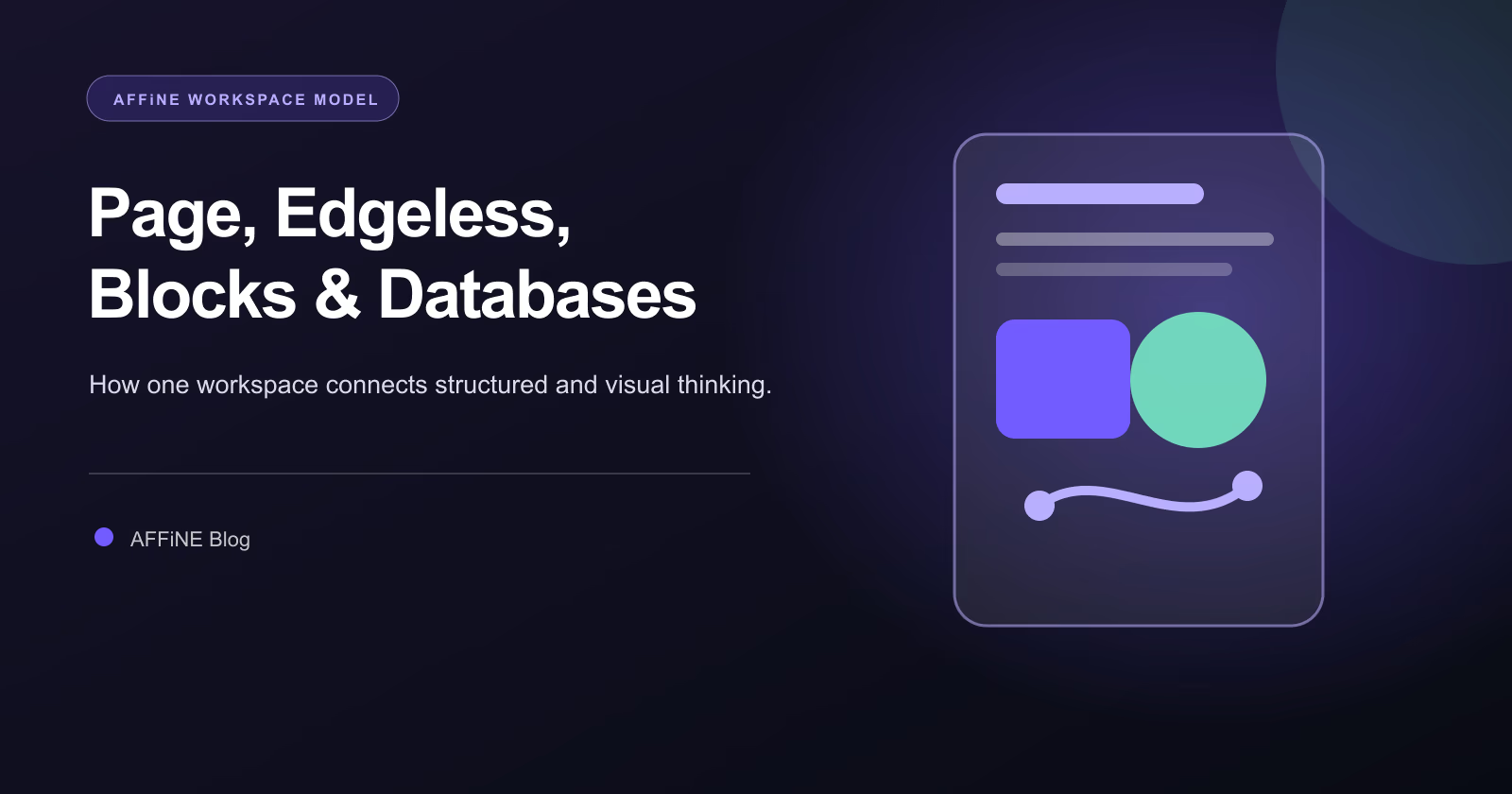
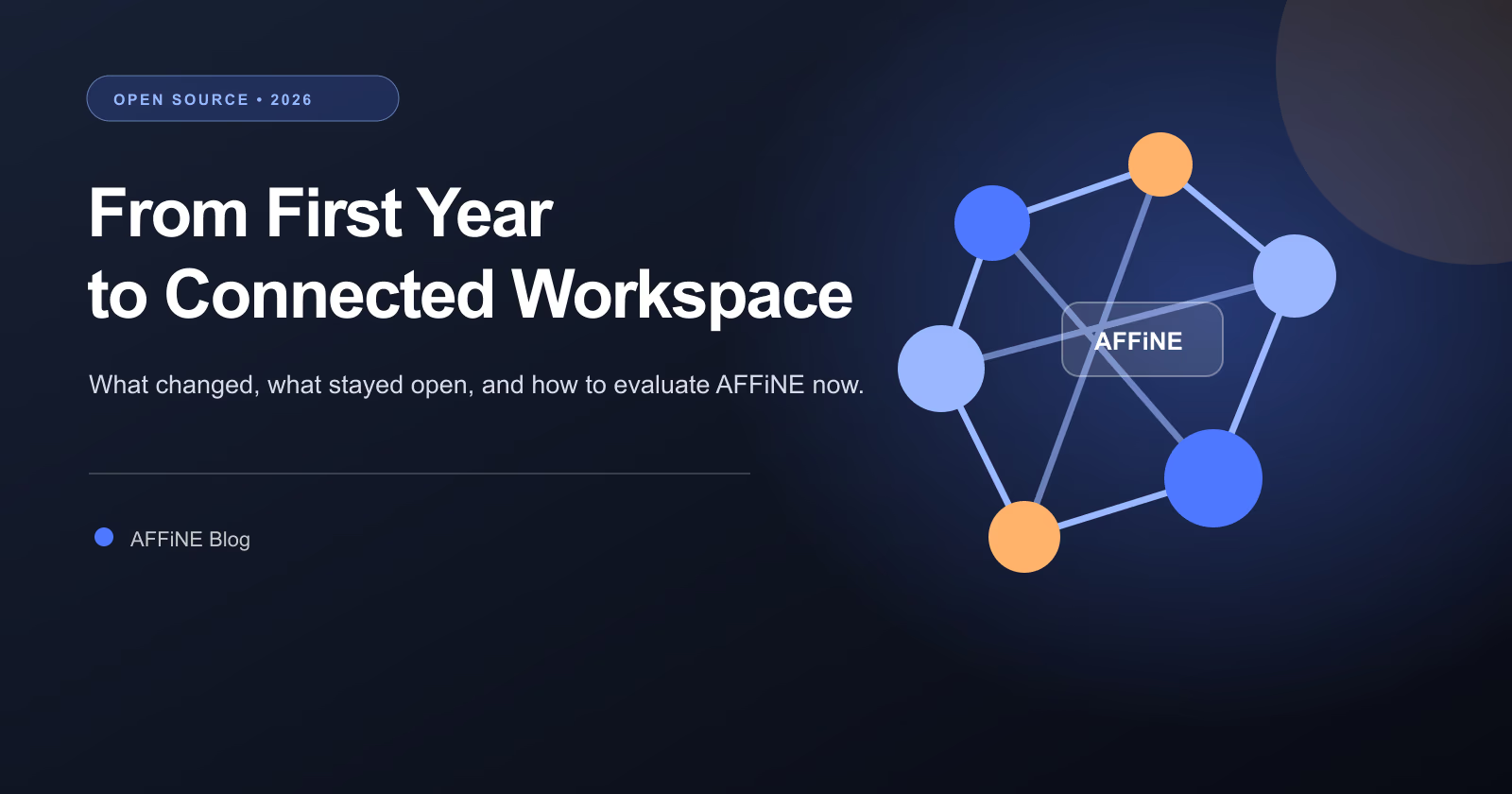
AFFiNE now presents itself as a connected workspace built around three practical surfaces:
- Page for structured writing, notes, specs, journals, meeting notes, and long-form documentation.
- Edgeless for visual thinking, whiteboarding, planning, diagrams, and spatial relationships.
- Databases and collections for turning loose pages or tasks into sortable, filterable working sets.
The product is no longer just a source repository and a prototype interface. Readers can use AFFiNE on the web, download desktop builds, explore mobile apps, and evaluate hosted or self-hosted deployment paths. The exact deployment choice matters: a solo user may only need local and cloud sync, while a team may care more about admin controls, collaboration, data residency, and upgrade behavior.
AFFiNE AI is also now a visible product area rather than a vague roadmap item. Treat it as an assistant layer for drafting, summarizing, and transforming workspace content, not as a reason to skip information architecture. AI output still needs a place to live, links to surrounding context, and a review habit.
What changed from the original roadmap
The old article talked about a vision. In 2026, the useful question is whether the vision has become a coherent workflow.
The most important shift is that Page and Edgeless are not separate apps. A team can draft a product spec in a page, open visual context on an Edgeless canvas, and keep related tasks or research in structured collections. That reduces the copy-paste loop between docs, diagrams, and trackers.
The second shift is distribution. Early open-source readers mostly evaluated AFFiNE through GitHub and developer builds. Current readers should evaluate the product through the actual surface they plan to use: web, desktop, mobile, cloud, or self-host. Open source still matters, but the day-to-day question is whether the workspace is dependable for your notes, documents, and team memory.
The third shift is licensing clarity. AFFiNE has repository components under different terms. If license obligations affect your deployment, review the current license and openness policy and repository notices before deciding how to modify, self-host, or redistribute the software.
How to evaluate AFFiNE now
Use a real workspace test rather than a feature checklist. Create one project with:
- a product or research page,
- a meeting note,
- a visual plan in Edgeless,
- a small database for tasks or references,
- a few links between those objects.
Then ask whether the workspace still makes sense after a week. Can you find the source note? Can you move from the visual plan back to the decision record? Can a teammate understand why a task exists? Those are better tests than asking whether a tool has one more formatting option than a competitor.
For teams comparing AFFiNE with other tools, read the open-source Notion alternative guide, the AFFiNE app overview, and the Page and Edgeless editor explainer. Those related articles give this anniversary page a current product path instead of leaving it as a standalone archive.
When AFFiNE is a strong fit
AFFiNE is a strong fit when your work moves between notes and spatial thinking. Examples include product discovery, research synthesis, planning workshops, personal knowledge management, and team documentation that needs diagrams or maps next to text.
It is also a strong fit when you care about open-source transparency and want a workspace that can be inspected beyond a vendor demo. That does not remove the need for operational diligence. If you are deploying for a team, check backup policy, account administration, self-hosting constraints, and the current product release notes before migrating important data.
When another tool may be better
If your company is fully standardized on Microsoft 365 document libraries, SharePoint may remain the operational center. If your engineering org is deeply tied to Jira, Confluence may remain the lowest-friction wiki. If your only need is a lightweight personal note app, a simpler local notes tool may be enough.
AFFiNE is most compelling when the problem is not just writing notes, but connecting written thinking, visual thinking, and structured planning.
Closing note
The first-year anniversary was a thank-you to the people who made AFFiNE visible. This refreshed version keeps that gratitude while making the page useful for 2026 readers. The open-source milestone was the beginning; the current question is whether AFFiNE can become the workspace where your team keeps thinking, planning, and knowledge connected.