Knowledge base software your team will actually use
AFFiNE brings docs, whiteboards, databases and AI together in one open-source workspace — so your team's knowledge stays connected, searchable and yours.
- 70K+ GitHub stars
- Local-first, works offline
- Self-hostable with Docker
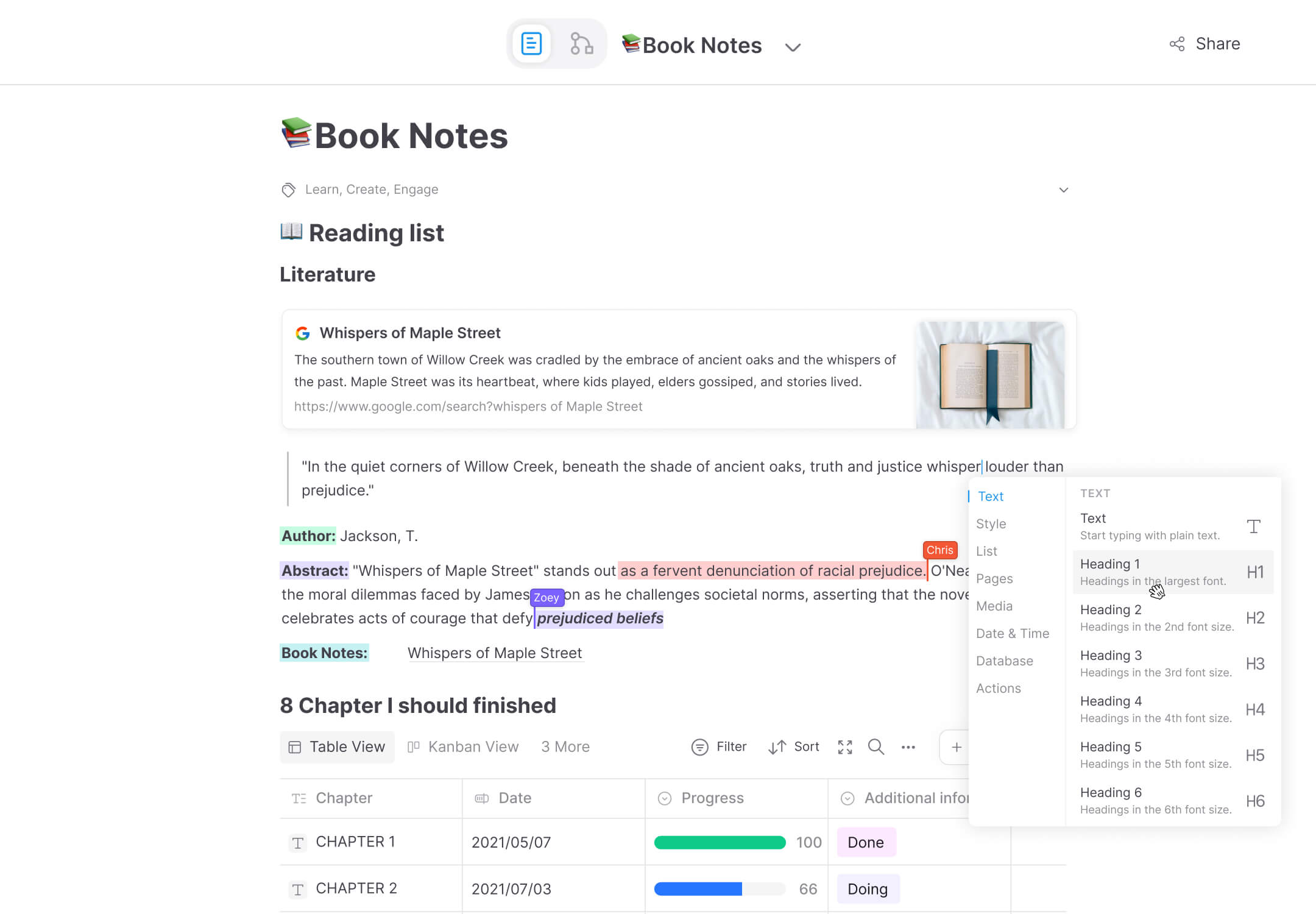
What good knowledge base software looks like
A knowledge base is only useful when people actually write in it and can find what they need later. Most knowledge management software fails on one of the two: either it is a rigid wiki nobody wants to edit, or a pile of docs nobody can search.
AFFiNE approaches the problem differently. Every page is both a document and a whiteboard, so specs, diagrams, meeting notes and plans live in one place instead of four different tools. Local-first sync keeps your knowledge available offline, and the whole platform is open source — you can read the code, extend it, or run it on your own servers.
Why teams choose AFFiNE as their knowledge base
One workspace for docs, whiteboards and databases
Write structured documents, sketch on an infinite canvas, and track work in database views — without switching tools or losing context. Your internal knowledge base stays coherent because everything links together.
See the whiteboardAn AI knowledge base, not just storage
AFFiNE AI drafts documents, summarizes long pages, generates mind maps and turns notes into presentations — grounded in your workspace content. Your knowledge base becomes something your team can ask, not just search.
Explore AFFiNE AIOpen source and self-hostable
AFFiNE is fully open source. Run it in our cloud, or deploy your own instance with Docker and keep every byte of company knowledge on infrastructure you control — a real answer to data-residency and compliance requirements.
Self-host AFFiNEFree to start, priced for teams
The free plan covers personal use and small teams. Cloud plans add collaboration, storage and admin controls as you grow — and self-hosting is free forever.
Compare plansHow to choose the best knowledge base software
There is no single best knowledge base software — there is the best fit for how your team works. Run any tool you evaluate, AFFiNE included, through these six checks.
Writing has to be effortless
If editing feels like filling in a CMS, people stop contributing. Look for a fast block-based editor, markdown support, and templates for recurring docs like meeting notes and specs.
Knowledge must connect, not pile up
Bi-directional links, backlinks and workspace-wide search decide whether your knowledge base stays navigable at 1,000 pages. A folder tree alone will not.
Check the format ceiling
Teams think in more than text: diagrams, flowcharts, project boards. If whiteboards and databases live in separate tools, knowledge fragments across them.
Ask what the AI can actually do
Useful AI drafts, summarizes and answers from your own workspace content. A generic chatbot bolted onto storage adds little.
Demand an exit path
Open formats, full export and — ideally — open source. If you cannot leave with your data, you do not own your knowledge base.
Match the deployment model to your constraints
Regulated or privacy-sensitive teams often need self-hosting. Most SaaS knowledge base tools cannot offer it; open-source tools like AFFiNE can.
AFFiNE vs. typical SaaS knowledge base tools
| AFFiNE | Typical SaaS knowledge base | |
|---|---|---|
| Docs + whiteboard in one page | every doc is also a canvas | Docs only; whiteboard is a separate product |
| Open source | full source on GitHub | Closed source |
| Self-hosting | Docker deployment, free | Rare, usually enterprise-only |
| Works offline | local-first storage and sync | Limited or online-only |
| Built-in AI | Drafting, summaries, mind maps, slides | Varies; often a paid add-on |
| Data ownership | Your files, your servers if you choose | Vendor-hosted only |
Capability snapshot, July 2026.
Frequently asked questions
What is knowledge base software?
Knowledge base software is a tool for capturing, organizing and retrieving a team's collective knowledge — docs, decisions, processes and know-how — in one searchable place. Good knowledge base software makes writing easy, keeps content connected, and helps people find answers without asking a colleague.
Is there a good free knowledge base software?
Yes. AFFiNE's free plan covers personal use and small teams, and because AFFiNE is open source you can also self-host the full product with Docker at no license cost. You only pay for cloud team features like shared workspaces, storage and admin controls.
Can AFFiNE work as an internal knowledge base?
Yes. Teams use AFFiNE for internal documentation, onboarding guides, meeting notes and project specs. Pages combine documents, diagrams and database views, and workspace search plus bi-directional links keep internal knowledge discoverable.
What makes an AI knowledge base different?
An AI knowledge base doesn't just store documents — it can draft, summarize and answer using them. AFFiNE AI writes and refines docs, condenses long pages, generates mind maps and turns notes into presentations, all inside the same workspace where your knowledge lives.
Is there an open-source knowledge base software?
AFFiNE is open source, with the complete source code on GitHub. That means no vendor lock-in: you can audit the code, contribute, export your data at any time, or run your own instance with Docker.
What is the best knowledge base software?
It depends on your constraints. If you want docs, whiteboards and databases in one open-source workspace — with the option to self-host — AFFiNE is a strong fit. If you only need a lightweight text wiki, a simpler tool may serve you better. Judge candidates on editing speed, linking and search, format range, AI usefulness, data portability and deployment options.
Build your team's knowledge base on AFFiNE
Start free in the cloud, or deploy your own instance — your knowledge, your choice.
Last updated: July 7, 2026